Clearer program information
Help visitors understand what a program offers and where to go next.
SEO SERVICES FOR COLLEGES
Technical SEO, clearer program content, and a stronger website structure. We identify the issues, implement the fixes, and explain what changed.
Technical fixes. Program content. Migration planning.
A prospective student may arrive through a program search, a campus announcement, or a link shared months ago. Your website needs to help them reach useful information wherever they begin.
We work on the technical foundations and content structure behind those journeys. The goal is a website that search engines can understand and students can navigate with confidence.
Help visitors understand what a program offers and where to go next.
Address broken links, outdated destinations, and confusing paths through your site.
See the priorities, the changes completed, and the evidence used to verify them.
CONTENT THAT MAKES SENSE
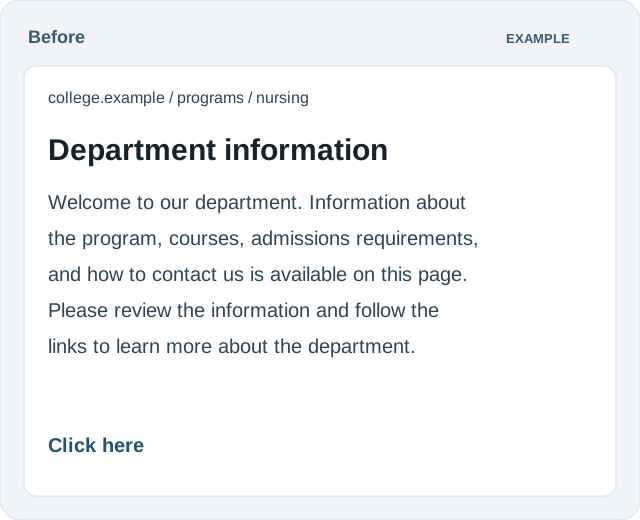
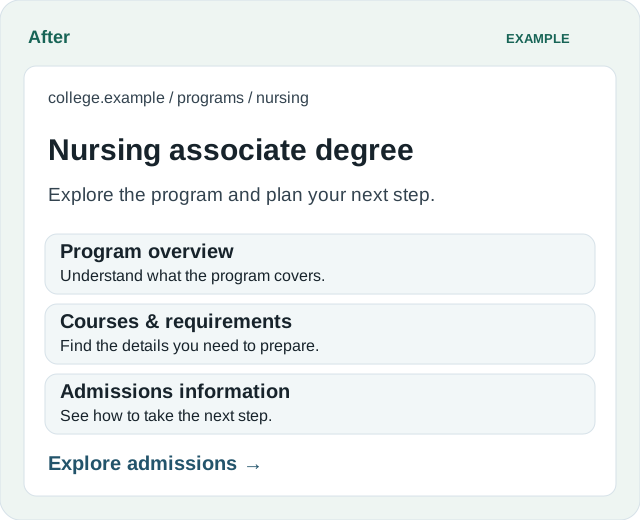
A useful program page starts with a descriptive title and an organized explanation of what students need to know. We improve metadata, headings, and internal links so each page has a clear purpose.
Where content changes are part of the agreed scope, we help structure existing information into sections that are easier to scan and maintain.
A BETTER FIRST IMPRESSION
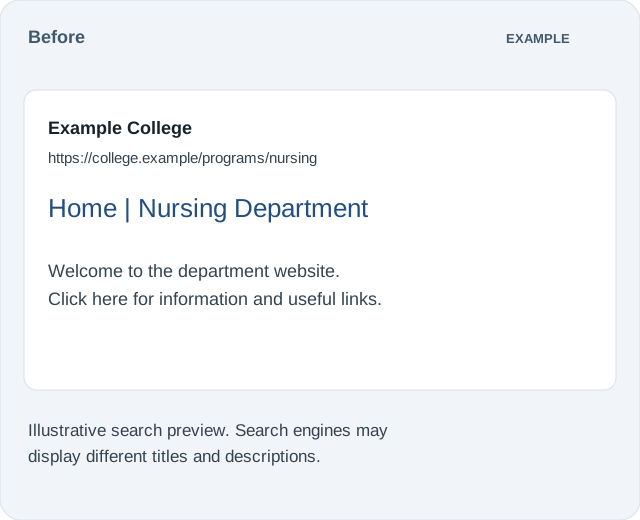
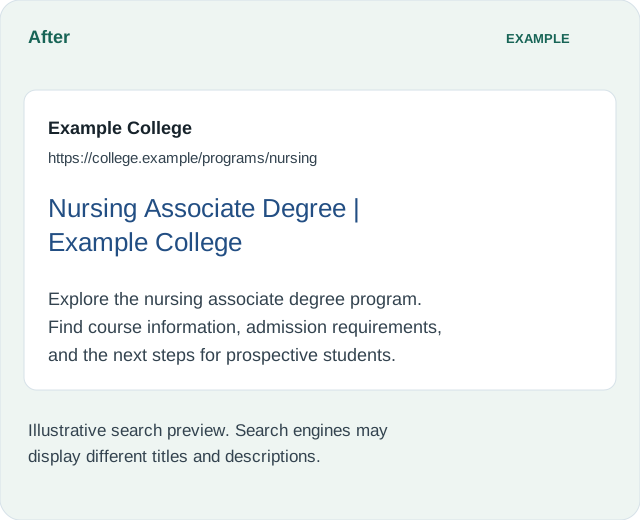
Page titles and descriptions give search engines information about a page and help people decide whether it answers their question. We review them for clarity, relevance, and consistency across important pages.
For a program page, that means describing the actual program rather than relying on labels such as “Home” or “Department.”
HANDS-ON IMPLEMENTATION
The engagement is scoped to your website and priorities. These are the areas we can address.
Identify crawl and on-page issues, review relevant structured data, and turn the findings into an agreed work plan. Implement and verify the fixes included in that scope.
Investigate page weight and template-level performance issues. Address the identified causes within scope, including image delivery and loading behavior where applicable.
Improve unclear or duplicated titles, review descriptions, and organize headings so pages communicate their purpose consistently.
Connect related pages, clarify navigation within content, and help visitors move between programs, courses, and useful campus information.
Review broken internal and external links and repair or replace destinations where appropriate. Verify the affected paths after changes are made.
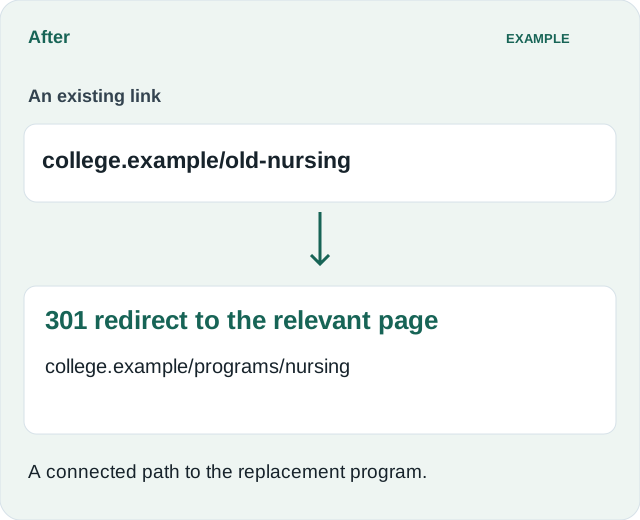
Map changed URLs to relevant destinations for redesigns and CMS migrations. Implement the agreed redirects and check that they reach the intended pages.
REDESIGNS & CMS MIGRATIONS
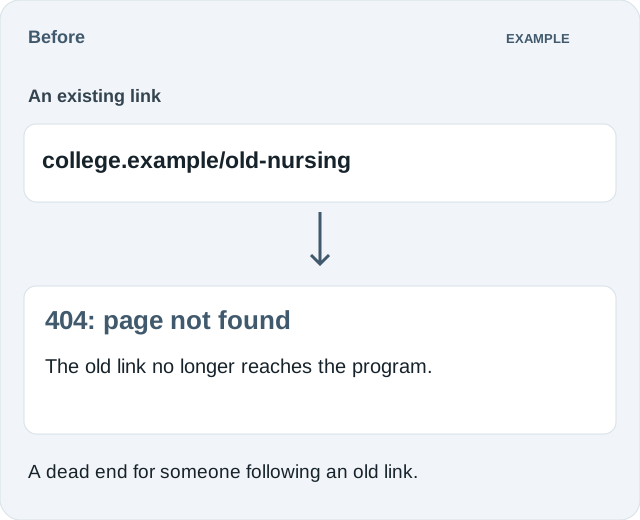
A redesign can change page addresses, navigation, and content structure. Redirect planning helps people using older links reach the information they need on the new site.
We review the URLs involved in the migration, map appropriate destinations, and check the implemented routes. Where an equivalent page no longer exists, we work with your team to choose an appropriate response rather than sending everything to the homepage.
HOW WE WORK
Review the site, its technical findings, your priorities, and any upcoming changes. Agree on the pages and issues the engagement will cover.
Separate immediate fixes from larger structural changes. Explain the recommendations and agree on implementation responsibilities.
Complete the agreed changes, check the affected pages and links, and document the work. Coordinate with your team when content or access decisions are needed.
Compare findings with the baseline and explain what has changed. Identify outstanding items and recommend sensible next steps.
WHAT YOU RECEIVE
Your agreed scope defines the work. A typical engagement includes:
Scope, timing, access requirements, and reporting cadence are agreed before work begins.
We report the changes completed and the technical findings verified against the baseline. Your team can see what was fixed, what remains open, and what requires a content or business decision.
Where search or analytics data is available and included in the engagement, it can provide additional context. Technical scan scores, search visibility, website visits, and inquiries measure different things. We keep those distinctions clear.
OPTIONAL WEB GOVERNANCE
GuardGrid provides web governance tools for accessibility, broken links, SEO, and content quality. Where available, its scan history can help inform priorities and track technical findings over time.
College Inbound, a Revion Solutions company, provides the hands-on college website service described here. GuardGrid is a separate platform and subscription. We will explain the tools and access needed for your engagement when we scope the work.
Frequently asked questions
Five SEO priorities for community college websites
We scope the work around your website and goals. It can include technical fixes, metadata and heading improvements, content organization, internal and broken-link cleanup, performance work, and migration redirects. Your proposal identifies the deliverables and responsibilities.
Yes. We can include URL mapping, redirect planning, and checks before and after launch. Involving us before URLs change gives us time to review existing paths and plan appropriate destinations.
Content organization and optimization can be included. If you need new copy or substantial rewriting, we will agree on that scope, source information, and review responsibilities before starting.
Timing depends on the site size, issue types, access, and agreed deliverables. We establish a schedule after the initial review and distinguish implementation timing from the time search engines may take to reflect changes.
No. Search rankings and student decisions depend on factors beyond any single website change. We commit to the agreed work and report its completion and verification clearly.
GuardGrid is a separate subscription. We will confirm whether it is part of your proposed engagement and explain any related access or costs before work begins.
Typically, we need the relevant website access, a contact for priorities and approvals, and accurate source information for any content changes. We confirm the exact requirements during scoping.
Tell us which CMS you use and how the site is managed. We will review access and technical requirements before confirming the implementation scope.
Some improvements, such as clearer headings and navigation, can support both usability and SEO. SEO work does not replace an accessibility assessment or guarantee compliance. Accessibility remediation can be scoped separately.
Tell us about your college, your website, and what you want to improve. We will review your needs and outline an appropriate scope.
info@collegeinbound.com